Twenty-Six Tubs of Turkey Stock
November 25, 2026
“Make me 26 labels for turkey stock I made yesterday.”
That was the whole request. I sent it in Slack the day after making the stock, when I knew how many tubs I had to put away. Cora put November 24 on the labels and sent the first one to the DYMO. I checked that it came out cleanly and replied, “Confirmed.” Then she sent the other 25.
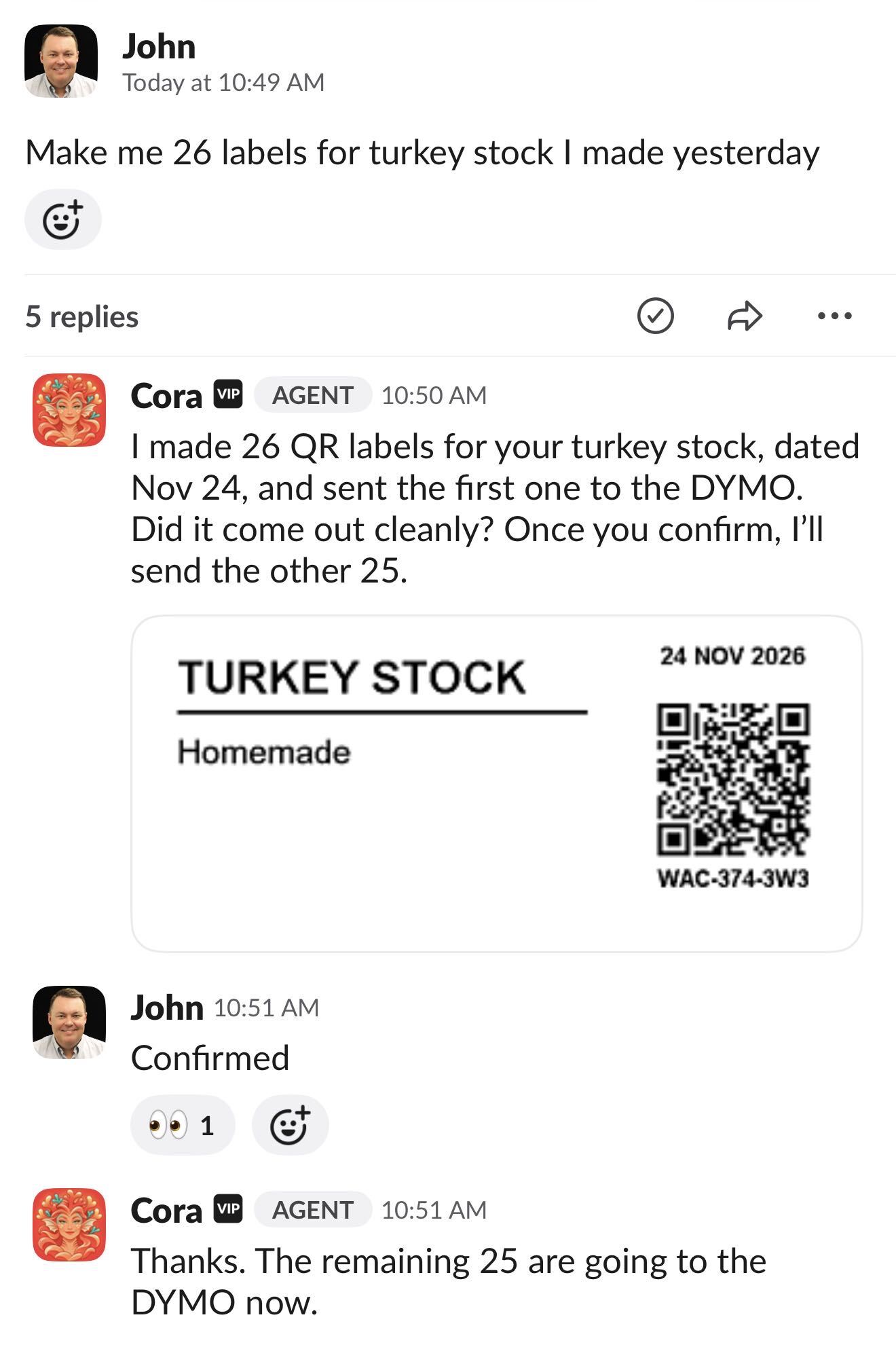
One test label before printing the rest of the batch.
In Finding What I Put in Boxes, I wrote about using labels to connect physical things to their digital records. The freezer is where that idea has become a habit. I work with my OpenClaw cooking agent through most cooking projects, so by the time I’m packing up leftovers, I’ve already been talking to an agent about the food. Asking for labels in Slack feels like the last step of cooking, not the first step of filling out an inventory form.
The 26 labels all say Turkey Stock, but they aren’t 26 copies of the same sticker. Each has its own QR code linked to that tub’s record in Cotrugli. The name and date are right there in plain text, so I don’t need to pull out my phone to find what I’m looking for. The QR code is for when I want to look up the container rather than just grab it.
The DYMO lives in the garage, right next to the freezer. I send the request, carry the tubs down, slap on the labels, and stack them on the shelf. No extra trip to pick up stickers. No sitting at a computer after I’ve cleaned the kitchen. And there’s something disproportionately satisfying about seeing those tidy stacks of turkey stock next to the gumbo and meat sauce, every tub labeled with what’s actually in it.
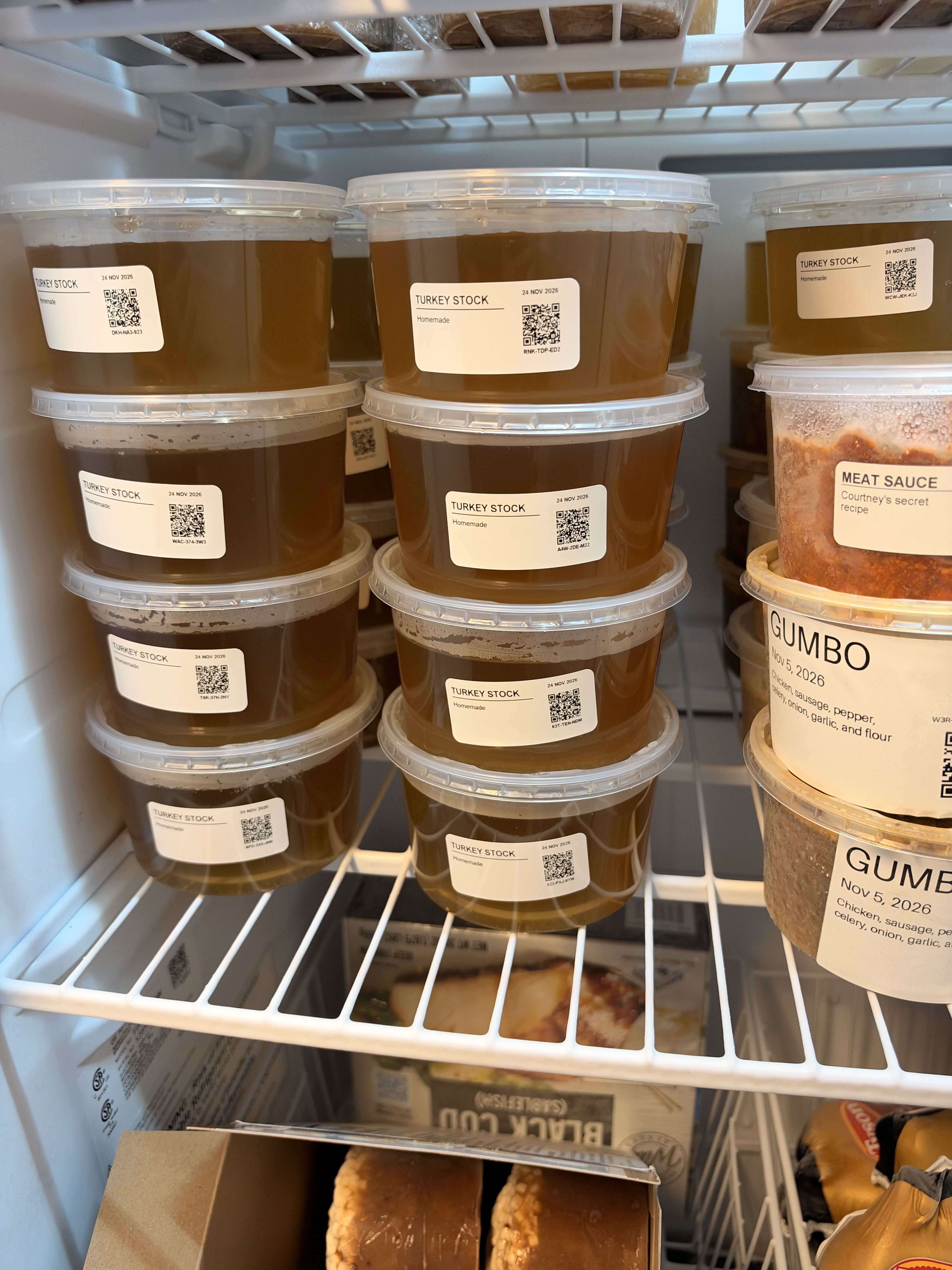
Turkey stock, gumbo, and meat sauce. No mystery tubs.
The QR codes are the clever part, but putting the printer next to the freezer is what made the whole thing stick.