My Kitchen Crib Sheet
October 4, 2026
I keep a recipe crib sheet taped to the inside of the kitchen cupboard over my stove. These are dishes I already know how to cook. I just need the amounts, an oven temperature, or a reminder of what goes in next. Pan pizza dough gets a few lines for flour, salt, yeast, water, and oil. A sauce gets its ratios. There’s no need to read a whole recipe to remember how much soy sauce to use. Having the measurements right there gives me the confidence to make up the rest, relying on feel and experience.
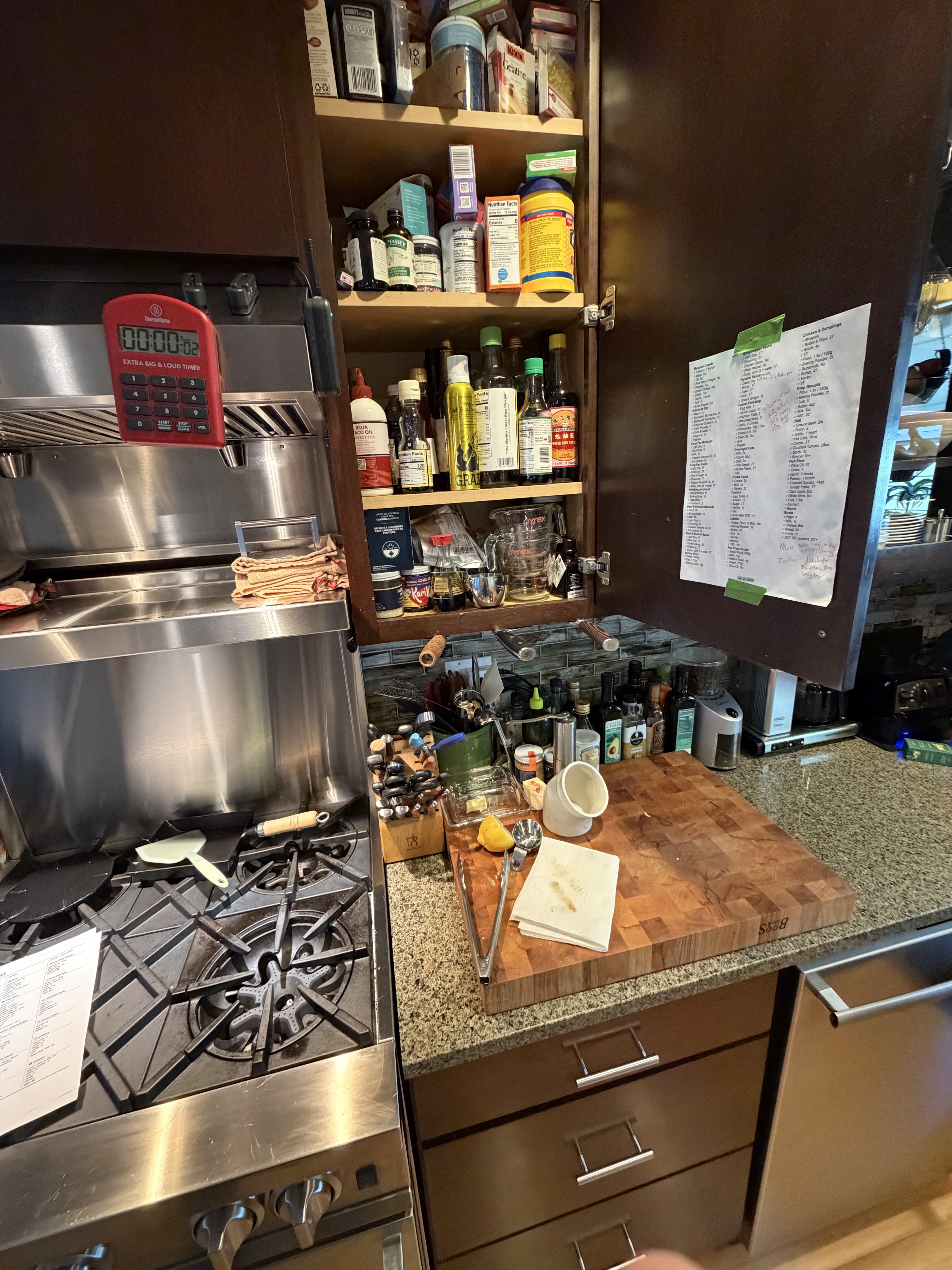
The sheet lived in Google Docs. The printout on the cupboard was dated January 15, 2024, and had picked up a few additions in red pen. On September 6 I asked Codex to move it into my vault as Markdown and make a skill to maintain it. That way I can ask for a change, look at the result, then print a fresh copy without laying out the sheet again each time. The Markdown holds the recipes and my source notes, and the skill turns the useful bits into HTML and a PDF.
I spent most of the conversation refining what belongs on the paper. I simplified the header, removed recipe numbers, added food emojis, and grouped recipes into four columns. I shortened wording that wrapped awkwardly and removed the teaspoon and tablespoon legend. The cookbook page references can stay in the source. I also added the tinned fish dip I’d made the day before and rounded its cream cheese and mayo to 100g and 50g.
It also has to work on my grayscale laser printer. That meant white paper, black text, thin rules, and a single 8.5 by 11 inch page. The footer has the date so I can tell which version I’m looking at. On an earlier PDF attempt, the emojis came out at the wrong size, so I specifically asked Codex to check the rendered PDF before calling it finished. The workflow now checks that the content fits on one page, then requires a look at the actual output, including the icons.
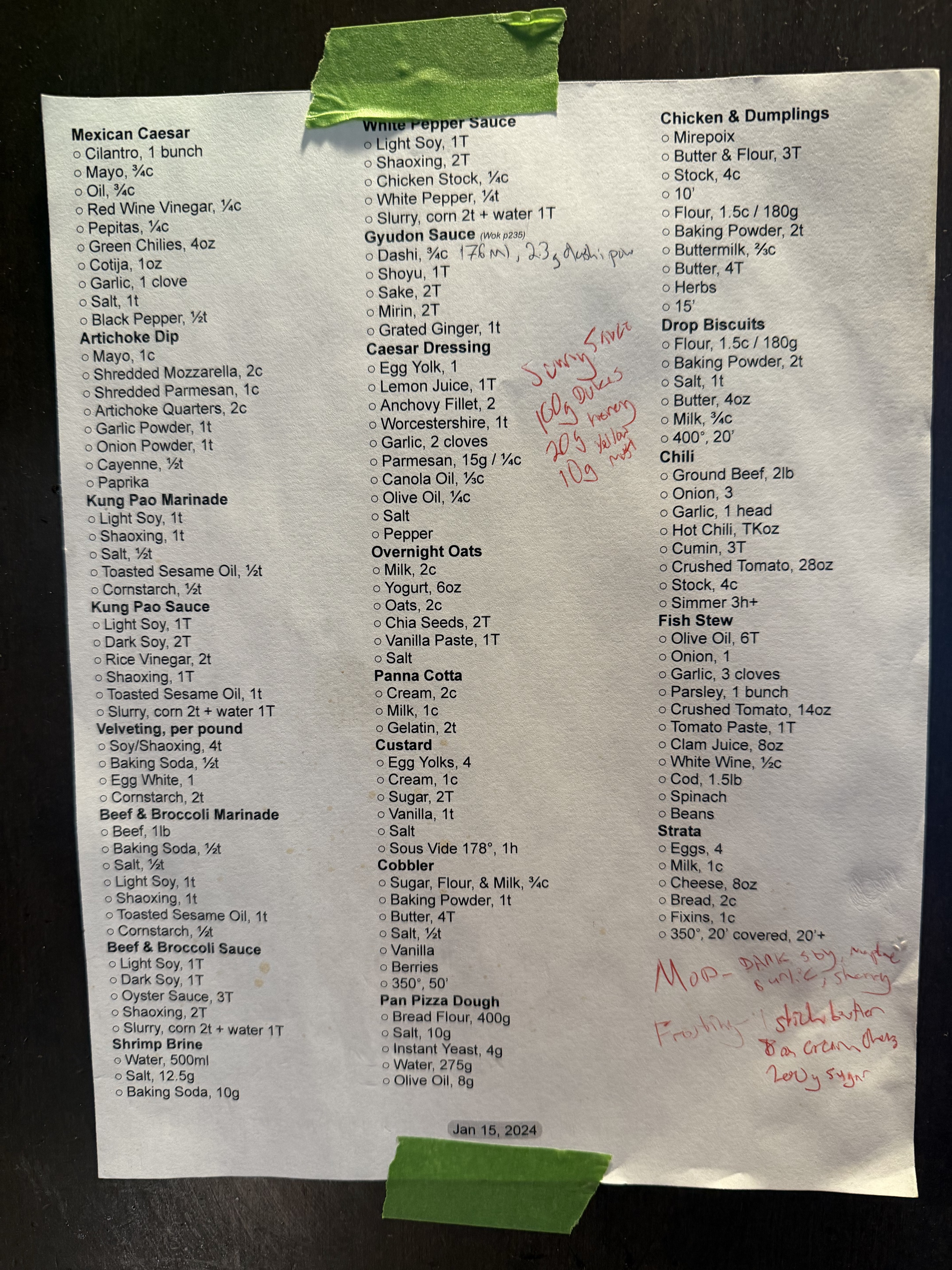
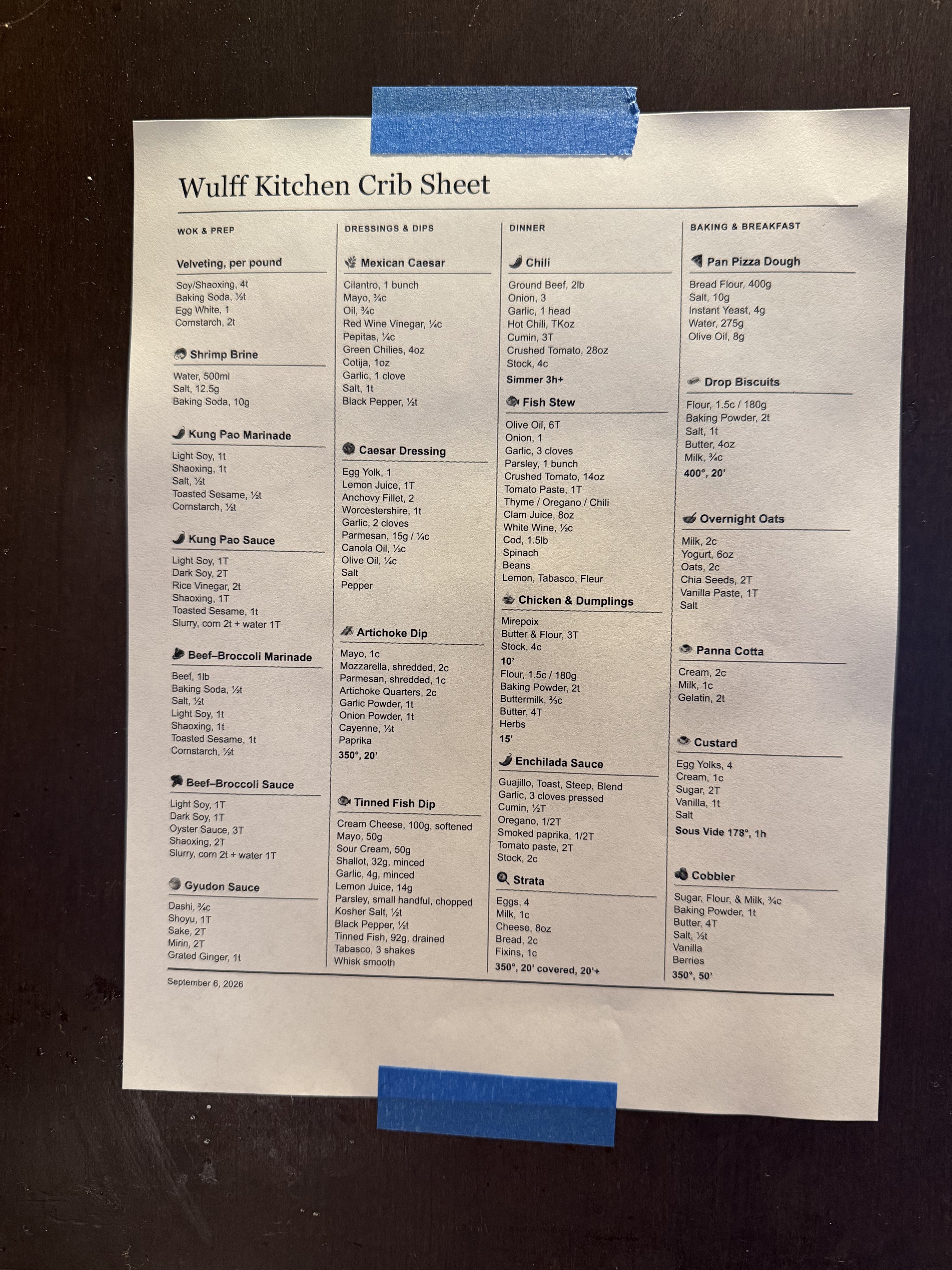
The old sheet with handwritten additions, and the new one printed and back on the cupboard door.
I published the reusable version as Kitchen Crib Sheet. It includes the skill instructions, renderer, and a small example to replace with your own reminders. I used archify, humanizer, and last30days-skill as references for packaging a skill with focused instructions and the code needed to carry them out. The public version uses bundled, licensed icons so it doesn’t depend on the emoji font on my Mac.
The skill keeps the decisions from this conversation available for the next edit. It knows to preserve my amounts, keep the wording compact, and rebalance whole recipes across columns. If I ask to see a revision, it makes the HTML preview. If I ask for a printout, it finishes with the checked PDF. I also included a private-to-OSS skill to track the work of removing personal dependencies, checking licenses, and testing a private skill before sharing it.
My finished PDF is in the GitHub release. It still has my shorthand and a few unresolved quantities.
– John